

What We Mean by ‘Learner-Driven’
Learner-Driven?
Most schools say they care about independence.
We do too & we mean something more specific.
A learner-driven environment doesn’t just give young people choices. It asks them to take ownership.
Ownership of:
their time
their work
their goals
their relationships
and, slowly, their identity
This doesn’t happen all at once. And it doesn’t happen by stepping back completely.
It happens through structure.
At Canopy, each day is built around clear rhythms:
a morning launch
focused work time
goal setting and tracking
collaboration and problem-solving
reflection
Within that structure, learners are making decisions constantly.
What will I work on today?
What matters most right now?
Where am I stuck—and what will I do about it?
That’s the shift.
Not “What was I told to do?”
But “What am I choosing to do with this time?”
It can feel uncomfortable at first.
For learners who are used to being told what to do, freedom can feel like uncertainty. For families, it can feel like a leap of trust.
But over time, something changes.
Learners begin to:
follow through on what they start
recover more quickly from mistakes
speak more clearly about their thinking
take responsibility without being asked
And most importantly, they begin to trust themselves.
That’s the work.
Not just learning information—but learning how to direct a life.
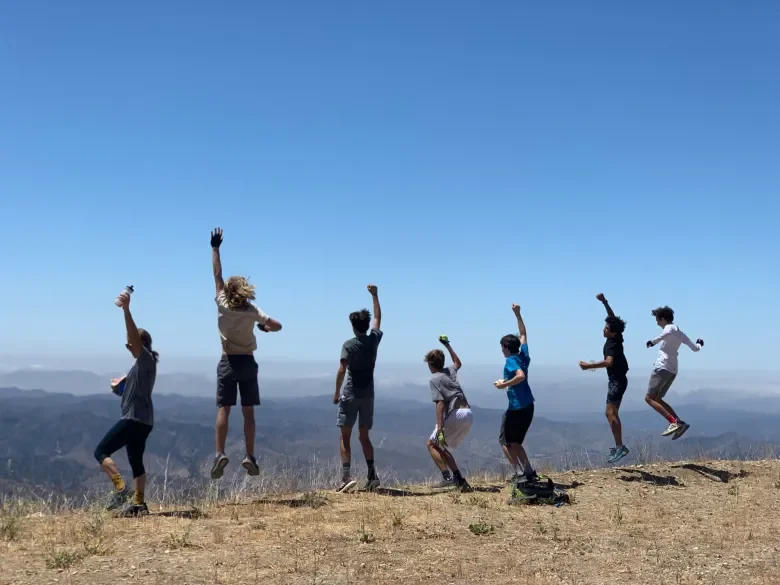
The Long Game: What We’re Really Preparing For
What might be possible if we played the long game?
It’s easy to focus on short-term outcomes.
Test scores. Grade levels. Immediate progress.
Those things matter & they aren’t the whole picture.
At Canopy, we’re thinking about a longer horizon.
We’re asking:
Who is this child becoming?
Because information changes.
Technology changes.
Even entire industries change.
But certain capacities endure:
the ability to think clearly
the ability to learn independently
the ability to work with others
the ability to navigate uncertainty
Those aren’t built through passive learning.
They’re built through experience.
Through:
making decisions
facing consequences
trying again
being part of a community
contributing something that matters
This is why we don’t rush to intervene at the first sign of struggle.
Struggle, when supported well, is part of the process.
It’s where resilience forms.
It’s where identity forms.
It’s where learners begin to see:
“I can handle this.”
That belief carries far beyond school.
It shapes how someone approaches:
work
relationships
challenges
opportunities
That’s the long game.
Not just preparing children for the next level of school.
Preparing them for a life they can direct, adapt within, and take responsibility for.